
Oct '25
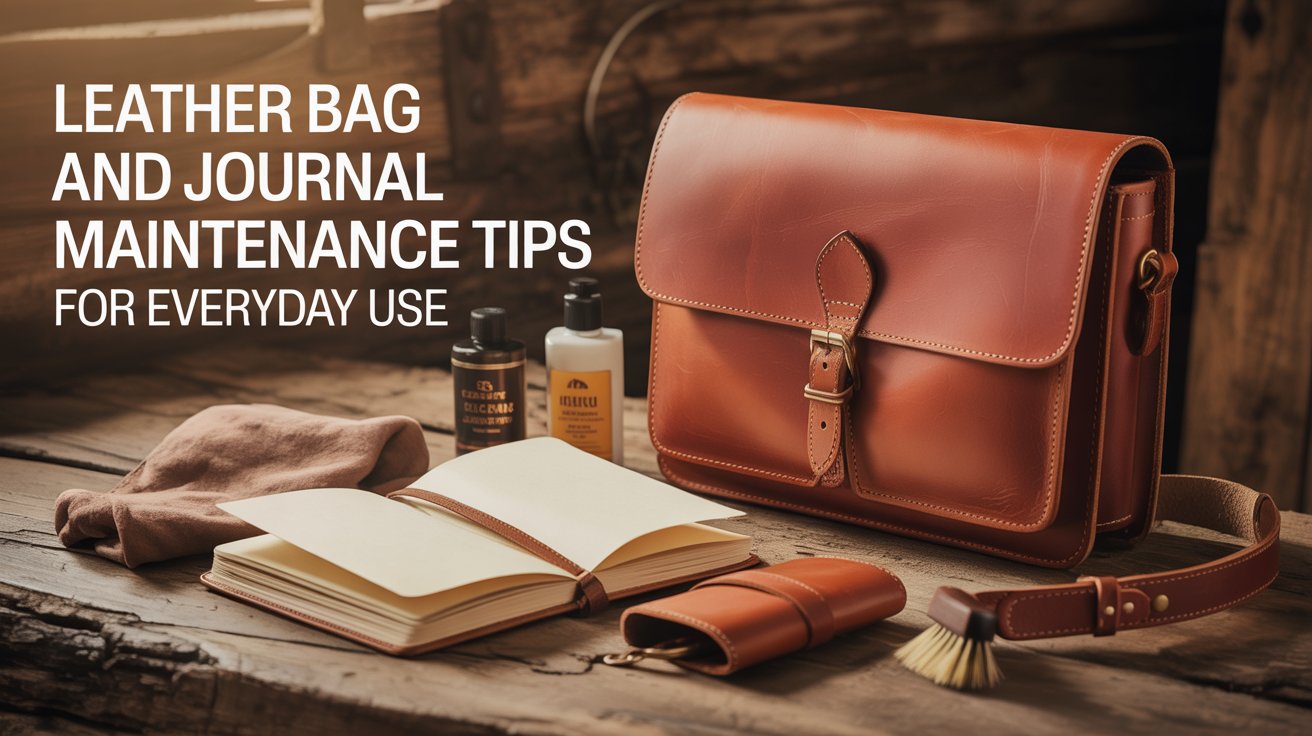
Be it your carry-all, your favourite writing companion, real leather accessories should be kept well. When you spend money on any product, such as a quality leather bag or a handcrafted leather journal, by maintaining it, you can have years of wear and tear-free use of what you bought. In this article, we shall endeavour to give tips to take care of leather bags and leather journals, including cleaning, conditioning, storing, and day-to-day practice.
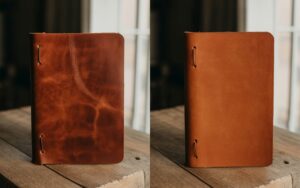
Leather is a natural product – similar to skin – and with time, it may become dry, faded, scratched or distorted when not taken care of. Proper habits on how to keep leather bags and journals are useful in saving the colour, shape, texture and structure of the leather bags and journals. By doing the right thing, your things will age beautifully and have a nice patina, and have value.
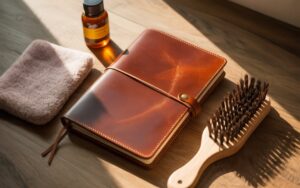
Leather can easily be worn out due to dust, dirt and everyday use. Wipe surfaces on the bag and journals with a soft microfiber or cotton cloth. In case of a journal, wipe the cover using a towel; in case of a bag, make sure the exterior and hardware are cleaned. Cleaning regularly will stop the accumulation of dirt and help take good care of your leather products.
The oils, lotions, and dirt found on your hands can be transferred to leather from where you open to write in journals or the bags you carry on your shoulder. The leather finish should be protected by always trying to deal with reasonably clean hands.
With bags: the over-filling of a leather bag may cause the leather to stretch, the shape to warp, and the straps or handles to get tired.
In the case of Leather journals, do not bend them open flat and strain the spine or cover. It is better to be gentle in use so that the life of this daily accessory can be long.
How to clean Leather Bags and Journals.
After cleaning, it’s wise to apply a leather conditioner or cream to help maintain suppleness and prevent drying/cracking. Key leather protection tips include:
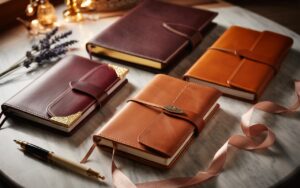
Although you are not using them at this moment, the way you store your leather bag or journal is huge in making a difference in how long it will last.
Proper Storage
To store leather items, follow the following steps:
In case you have a bunch of leather goods, switch their utilisation so that one does not wear out too fast. Use every piece turn by turn, so there is no stress on one particular product only. This makes your products last longer.
Leather is subject to destruction by everyday life hazards. The following are precautions to be taken into consideration:
These measures will help to establish a good base of care: by wiping, cleaning regularly, conditioning now and then, storing carefully and being mindful of hazards. This will make sure your leather bag and leather journal are worth having as an accessory and not those that wear out too soon. Quality treatment means longevity, beauty and prolonged use.
Carrying a favourite leather bag daily or scribbling down in a nice leather journal, there is never an option of keeping up with leather bag care or leather journal care, as you want to keep them in good condition. You will save a little time now, and your leather accessories will look better, feel better and will be able to stand the test of time.
Here are the ways of making these habits a part of your daily routine of taking care of your leather: keep it clean, considerate oitsir condition, keep it in a good place, keep it safe against the things that could hurt it. Your leather pieces will become a well-worn friend, a nd style and functionality packed with longevity with regular maintenance.
It does your leather goods the service–and you will never regret the quality, the feel and durability it will give.