
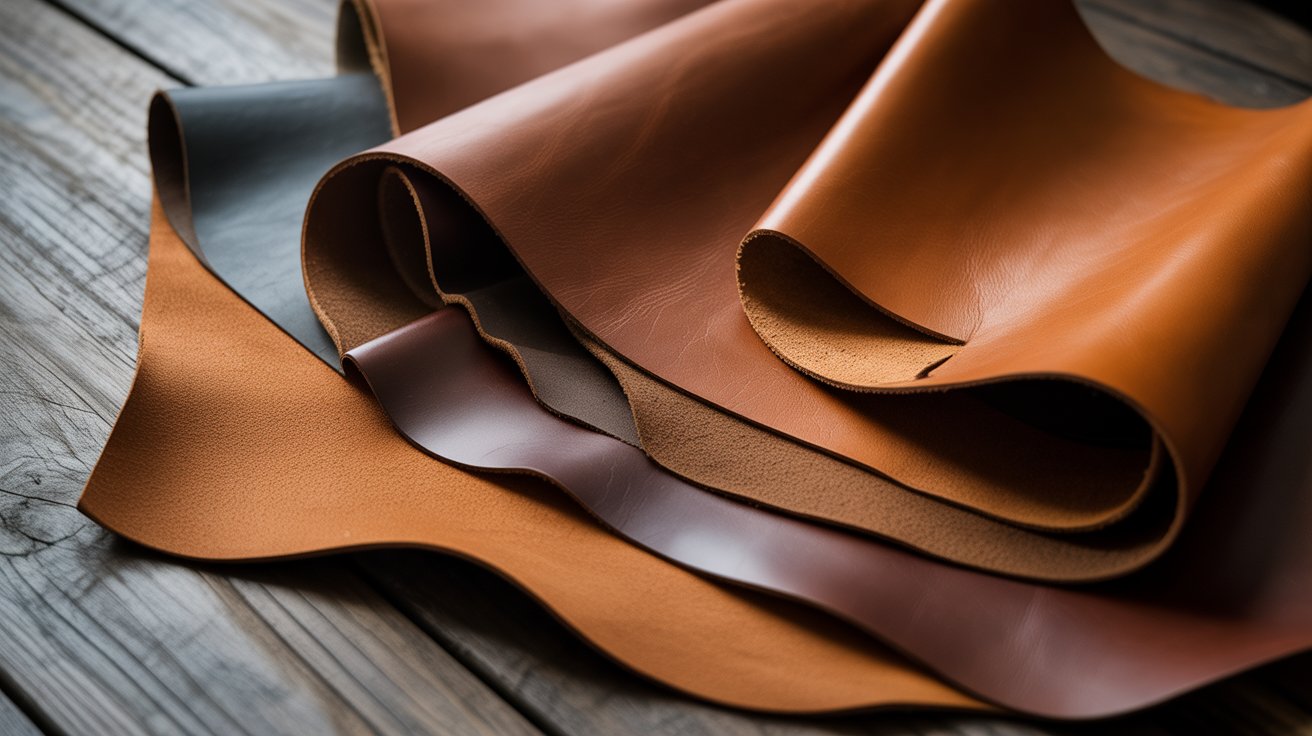
Leather appears simple on the surface; however, the selection of leather is all about the knowledge of what is beneath the surface. Have you ever questioned yourself why certain leather journals are soft and pliable, and others are hard and coarse? It is because of the leather thickness and the weight of the leather.
This leather thickness guide will enable you to see the fundamentals in a plain, non-jargon manner. The knowledge of how the thickness of leather works will inform you to make a smarter purchase, be it a journal, notebook cover, or a leather accessory. In case you are visiting the handcrafted work of Leather Journal Craft, this hint will make you enjoy the art even further.
Let’s start with the most commonly asked question: “ What is leather weight? ”
Leather weight is the thickness of the leather, and not how much it weighs in your hand. Historically, the weight of leather is determined in ounces. One ounce of leather amounts to a thickness of about 1/64 of an inch or 0.4 mm.
Then, when you come across something that is called 4 oz leather or 6 oz leather, it refers to thickness and not to mass.
This system is common in leather crafting and it is used to determine the extent to which the leather will be stiff, flexible or durable.
Everything will be simpler when one understands leather ounce thickness.
Here is a basic breakdown:
With every increase in ounces, strength and rigidity increase, and flexibility decreases.
A simple leather weight chart helps match thickness to use cases.
Medium-weight leather is the most favourable in terms of usability and durability of most writing aids and journals.
Thickness is important because of a vivid leather thickness comparison.
Thin leather is easy to bend and is soft, but it can be worn out by daily use. Thick leather can maintain its shape, cover pages more effectively and lasts longer; however, it is harder and heavier.
That is why the premium journal makers pay special attention to choosing the thickness, as opposed to just making it as thick as they can get. The goal is balance, not bulk.
Leather Journal Craft sizes are not so thick that they make the journal cumbersome to carry around and write in.
When choosing the leather thickness that you are going to use, think about the manner in which you will use the journal.
Ask yourself:
A 4-5 oz leather is perfect for daily use journals. It keeps the pages safe, has a high-quality touch, and improves with age. To add some character and long life to heirloom-style or rough journals, heavier leather may be used.
Leather Journal Craft designs its journals with this real-world usage in mind, selecting leather thickness that enhances both comfort and durability.
Thicker leather generally sees the development of deeper patina. The scratches, folds, and colour variations join the journal’s story rather than being flaws.
Thinner leather ages too conspicuously. Thinner leather feels softer and quicker, whereas heavier leather is more enriched and expressive as it is used.
If you enjoy the idea of a journal that evolves with you, leather thickness plays a major role in that experience.
A lot of individuals are bothered by colour or design and do not think about thickness. But the thickness of leather influences:
A journal with a good selection of thickness feels intentional and not accidental.
This is what distinguishes mass-produced items and those that are hand-crafted, such as those of Leather Journal Craft.
Understanding leather does not require expert-level knowledge. With a clear leather thickness guide, an easy leather weight chart and an idea of what leather ounce thickness is, you can be certain of finding a leather that suits you.
Whether you want to use a soft everyday journal or a rugged one, the right leather thickness makes all the difference. When craftsmanship meets the careful choice of material, the outcome will be a journal that will feel good from the first page to the last one.
In Leather Journal Craft, the leather journal thickness is not an added thought. It is part of the design, ensuring every journal feels durable, balanced and made to be used, as opposed to being admired.