
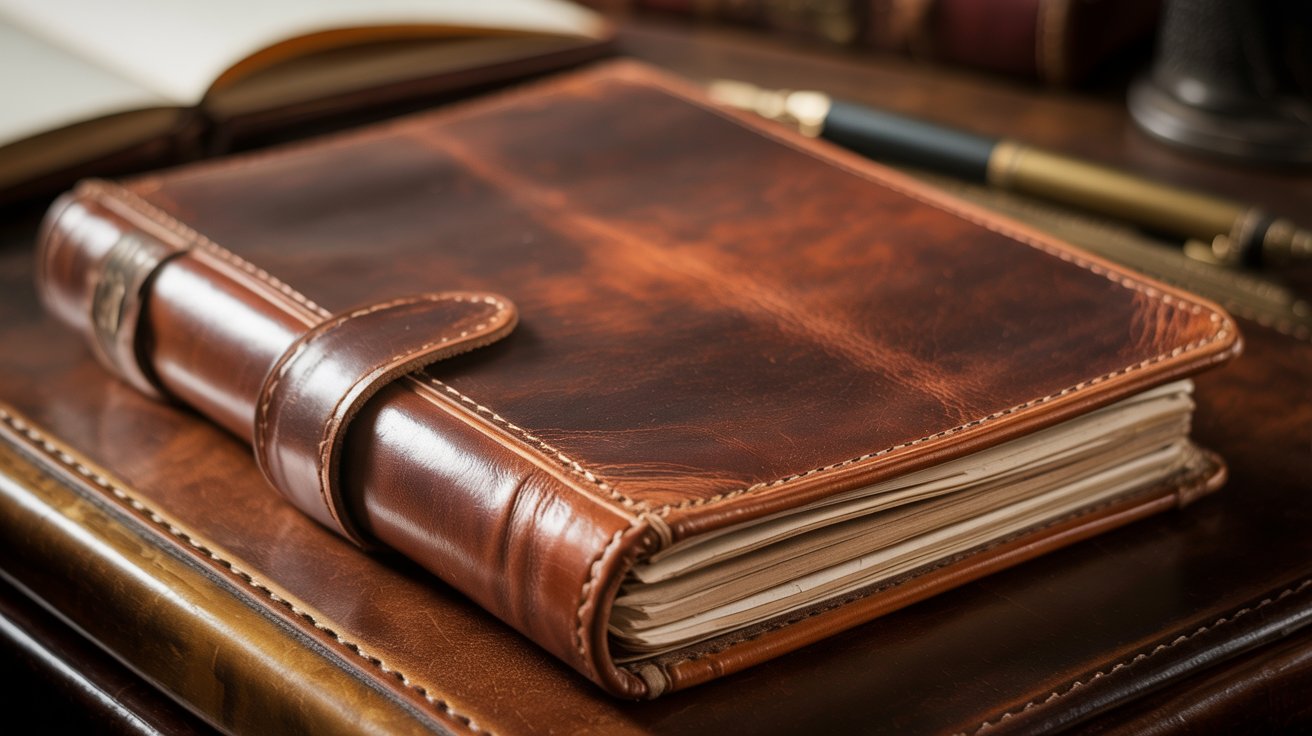
Real leather has a quiet charm that synthetic materials can never replicate. It does not remain frozen in time. It becomes soft, darker and also narrates a story. It is this natural conversion that makes real leather so unique. As it becomes older, it tends to become more beautiful as opposed to being worn out. Leather Patina is at the core of this change and something that leather lovers greatly admire.
Learning about ageing leather and how to take care of it correctly is one way of getting to appreciate the beauty of leather in a couple of decades. This guide will provide an understanding of what patina actually is, why ageing leather is a mark of quality, and how, with only a few simple habits, one can be guaranteed of real, long-lasting leather.
Leather Patina is the softness, deep colour, and smoothness of the surface that is formed on the real leather with time. It is natural because leather takes in oils from your hands, the sun, air, and being used daily. Patina is a positive change, as opposed to a scratch or damage. It includes life, usage and reality.
The leather of high quality forms patina progressively and uniformly. Every dot and shade difference is incorporated in its personality. This is the reason why two leather journals created out of the same hide will never appear the same after many years of usage. Patina transforms leather into an object of intimacy.
Artificial or cheap leather does not age. It breaks, sheds or splits unevenly. True leather, on the other hand, becomes better with age when maintained in good conditions.
One should not be afraid of leather ageing. The ageing of the leather shows that it is alive. Given that leather is breathing and reacts to the surrounding environment, its fibres tighten up and tighten. Colours become richer, particularly in vegetable-tanned leather, which is the choice in high-quality journals and handmade products.
Leather becomes more flexible over time and does not lose strength. This is what makes long-lasting leather. The effect of ageing is slow, and that is why it is included in the experience of patience. Artificial treatments should not be used regularly or frequently to improve the leather; instead, they will just damage it.
At Leather Journal Crafts, it is the emphasis on the true leather and old-fashioned craftsmanship that lets the ageing process work its magic so that the products are able to become more attractive with each passing year.
Most of those who are new to leather are concerned when they notice colour or texture variation. As a matter of fact, one of the most apparent indications that the leather is genuine and of quality is Leather Patina.
An excellent leather journal or other accessory is not supposed to appear as brand new over the years. It should evolve and change the way it looks. Greying of the edges, slight gloss where the hands come in frequent contact, and slight crevices are all signs of fresh leather growing old and doing so in a natural manner.
These modifications do not make the leather weak. Actually, they may tend to indicate that the leather has been used and loved.
Leather care does not involve using complex procedures. The most significant difference is made by simple and consistent habits. Simple rules of leather care can be used to maintain the functionality and attractiveness.
The first step is to have clean leather, you can clean it properly with smooth touches or a wet cloth but do not over clean it. A soft and dry cloth can be used to wipe off dust. A damp cloth is acceptable necessary but soaking leather must be avoided at all times.
Second, the leather should be able to breathe. Leather products should not be kept in plastic or air tight places. The natural airflow will avoid the moisture that will destroy fibers in the long run.
Third, protect leather against adverse environments. Too much sun may result in the uneven fading, whereas too much moisture will promote molds. Healthy aging of leather is encouraged through balanced conditions in the storage.
Leather is also skin, and just as the skin, it is better to occasionally nourish it. Conditioning assists in staying flexible and preventing drying or cracking.
Moderation is one of the key tips of leather care. Once or twice a year, conditioning is normally sufficient to keep leather journals and notebooks. Excessive conditioning may block pores and polish off the surface.
Apply a conditioner that is meant to be used on real leather sparingly. This makes the leather soft, but Leather Patina is formed naturally and not through any artificial means.
The leather story contains small scratches. A lot of tiny marks are mixed with the surface due to the redistribution of oils. Others go to the extent of adding richness to the leather patina.
Rather than attempting to eliminate all flaws, consider them as evidence of an active life. It is an attitude that is important in valuing long-lasting leather. Each marks stands as a moment, a journey, or an idea that is scribbled.
This is the philosophy that Leather Journal Crafts uses when designing its products. They are not supposed to hide their journals but make them daily. As time passes, every composition becomes its own.
Handwork is extremely significant in the ageing of leather. Leather that has undergone machine work is frequently heavily coated, which hinders or prevents its natural ageing. Pieces of leather, and particularly those produced by traditional means, can be left to change freely.
Durability is determined by the quality of stitching, edge finishing and the choice of leather. Properly designed objects have a long and smooth surface that does not wear out in years.
It is this detailing that enables leather products that were produced by Leather Journal Crafts to age into beautiful patina, and at the same time be dependable and usable.
Watching leather age is a very personal thing. A journal beginning hard and smooth gradually gets soft, used to and expressive. It reflects development, traditions and innovativeness.
This is one of the reasons why a person goes back to leather over and over. It is not just about utility. It is concerning continuity and the presence in a rapidly evolving world.
The genuine leather does not become obsolete. It matures. It is not a defect but a reward of being authentic in Leather Patina. When used thoughtfully and with basic tips on leather maintenance, real leather gets prettier, more intimate, and more expensive with time.
The process of ageing leather is not a competition. By buying consciously designed designs at Leather Journal Crafts, you are buying the durable leather that matures with you, can carry your story, and that indeed some things do become better as they age.